


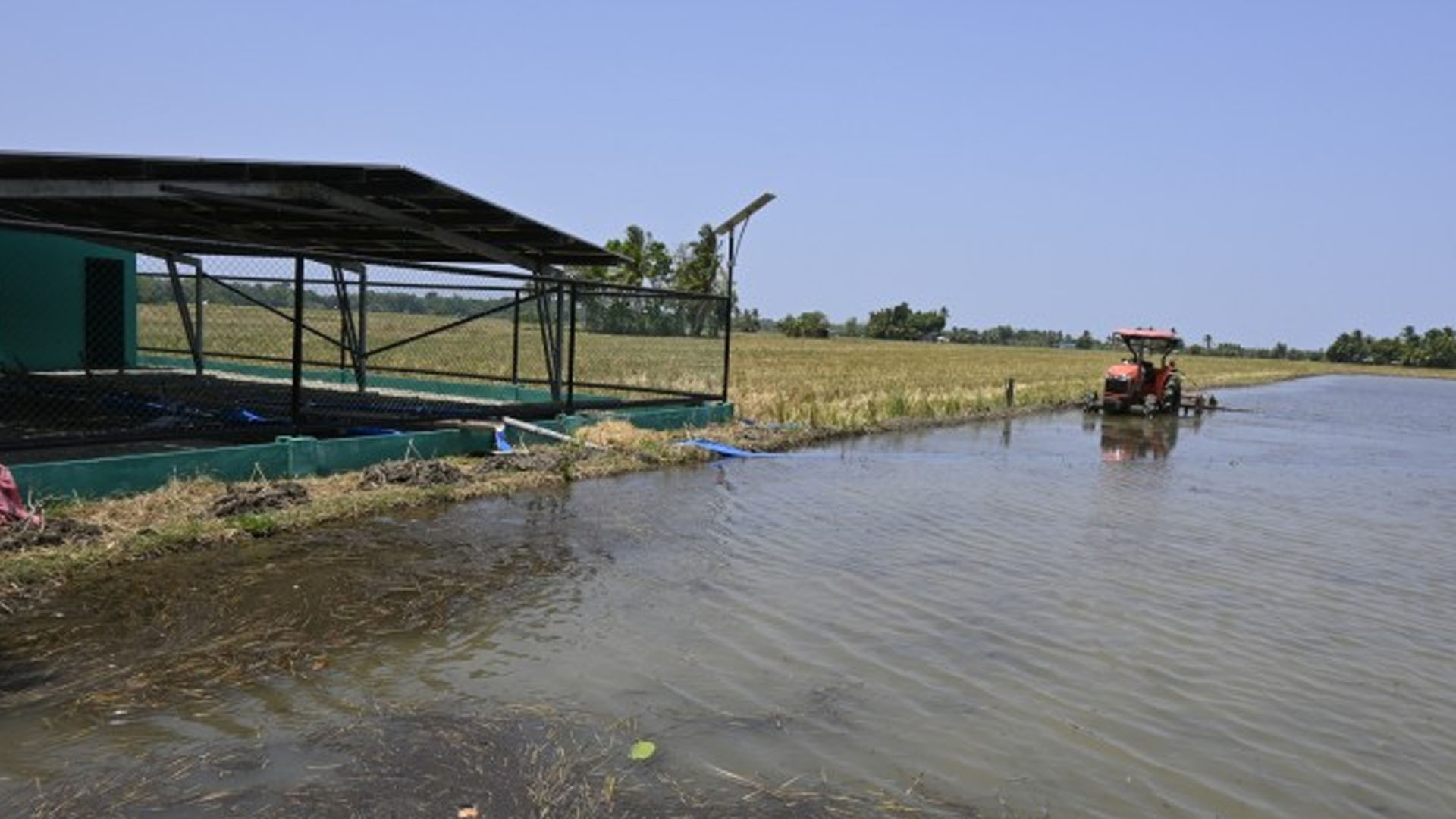






The National Irrigation Administration in Western Visayas (NIA-6), in collaboration with partner-government agencies, is bracing for the possible impacts of the El Niño phenomenon, including the fast-tracking of the implementation of the Solar Pump Irrigation Program (SPIP) and Small Reservoir Irrigation Development in the region.
In a media forum on Tuesday, NIA-6 Regional Manager Jonel Borres said the region has 141 SPIP units, as well as one operational and two under construction Small Reservoir Irrigation Systems.
The SPIP units are distributed in 59 locations across the region and Negros Occidental.
Borres said the solar pump irrigation program, which currently serves 2,534 hectares, will not only mitigate the effects of the dry spells but is also very timely given the high costs of petroleum products.
As long as the water source is available, he said, farmers in an area with solar pump irrigation can have three to four cropping without shelling out any expense on fuel.
“One of the parameters that we need in proposing the solar pump is the source. So, these areas have water which is being pumped by our farmers for irrigation,” Borres said, adding that the source for the irrigation can be ground or surface water.
He said they are using their resources efficiently in responding to the challenge caused by the weather phenomenon.
He said NIA has convergence programs with other partner agencies, like the Gulayan sa Palayan program, to help farmers earn income and not rely solely on palay.
Farmers are also encouraged to embark on drought-resistant crops. (PNA)