


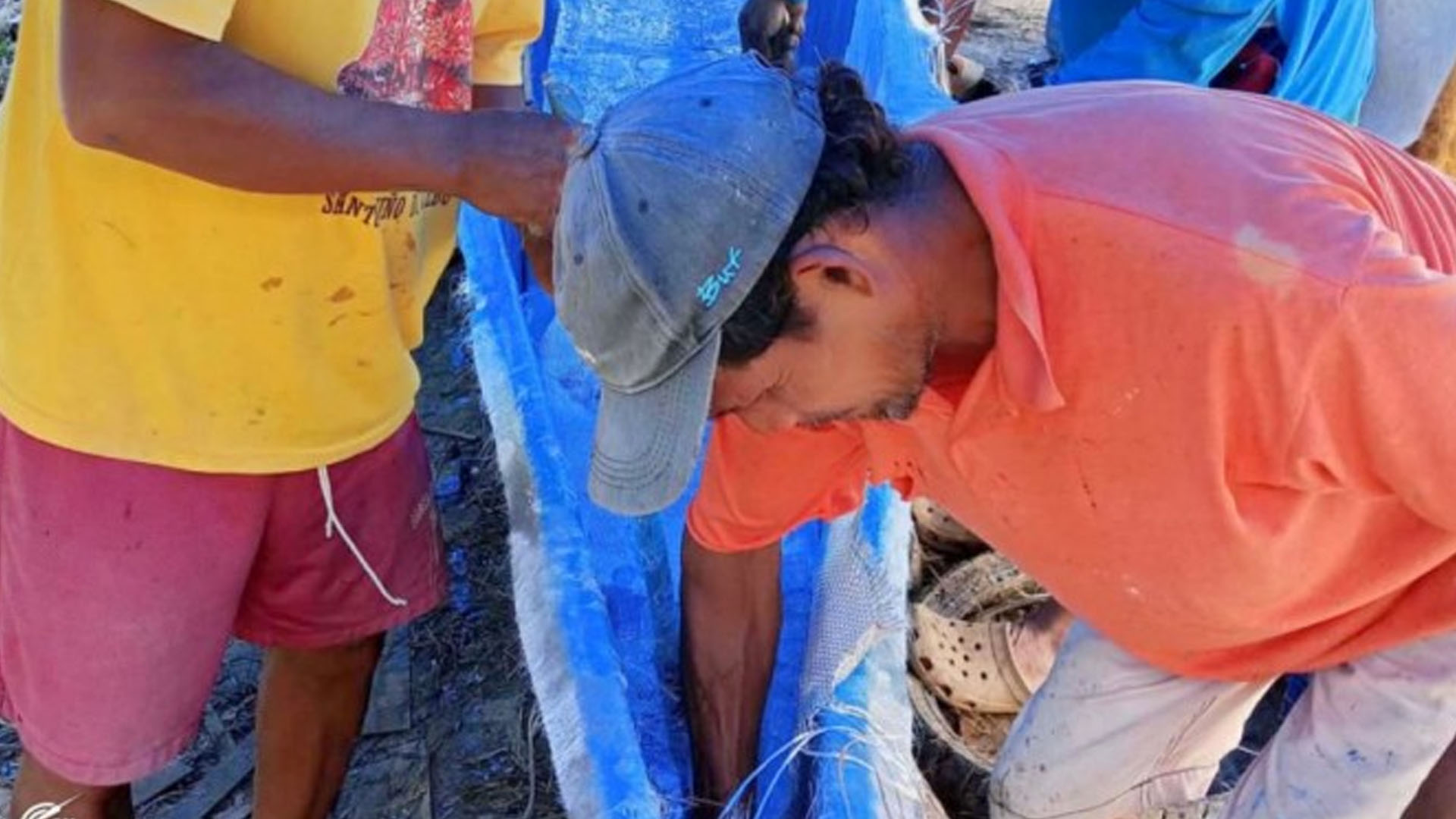






The monthlong “Bangka Ko, Gawa Ko” initiative in the Dinagat Islands in April showcased how technology transfer in fiberglass-reinforced plastic (FRP) boat production equips fisherfolk with modern skills to sustain and expand their livelihoods.
Through training in fabrication, repair, and maintenance, participants gained the ability to build and manage their own vessels, cutting costs and ensuring long-term resilience.
“The completed FRP boats were already turned over to the two organizations that joined the technology transfer training. Each group received 15 FRP boats,” Bernard Baclayo, provincial fishery officer of Dinagat Islands, said in an interview Tuesday.
The program, initiated by the Bureau of Fisheries and Aquatic Resources in Caraga Region (BFAR-13) under the Special Area for Agricultural Development (SAAD), benefited 60 fishers from two associations in the towns of Dinagat and Tubajon.
During the training, participants fabricated 30 FRP boats, each measuring 23 feet in length. Each boat is co-owned by two active members of the associations.
“Aside from technology transfer, the initiative also promotes shared responsibility and resource management within the groups,” Baclayo said.
Pablo Calderon, 48, of Barangay Mabuhay in Dinagat town and a father of four, has relied on fishing for more than a decade.
“The training came at the right time, as my old boat had become unseaworthy and was no longer fit to sail,” Calderon said in a phone interview on Tuesday.
He noted that the FRP boat-making technology helped them build structurally sound, seaworthy vessels.
“We can assure that the boats we built are seaworthy because of the modern techniques we used, including treated wood, fiberglass, and reinforced hulls,” Calderon said, adding that BFAR also provided engines, nets, and other fishing gear.
Joy Asuncion, 48, wife of participant Orlando, said they had planned to replace their old boat but could not afford it.
“After the training, we now have a new fiberglass boat and fishing gear. My husband can now venture farther to catch more fish,” Asuncion said.
She added that with the technology her husband learned, they plan to repair their old boat and convert it into fiberglass.
Another fisherfolk member, Alche Saimeron, emphasized that reliable boats built with modern techniques would allow them to fish safely, consistently and achieve steady income and food security.
“We are thankful to the government, especially through the SAAD program under BFAR, for the technology transfer,” Saimeron said.
BFAR-13 also acknowledged the support of the Dinagat provincial government and the local governments of Tubajon and Dinagat for the success of the training.
“All the materials, tools, and equipment came at no cost, and the beneficiaries also received fishing gear and accessories as part of the comprehensive livelihood support package,” BFAR-13 said. (PNA)