


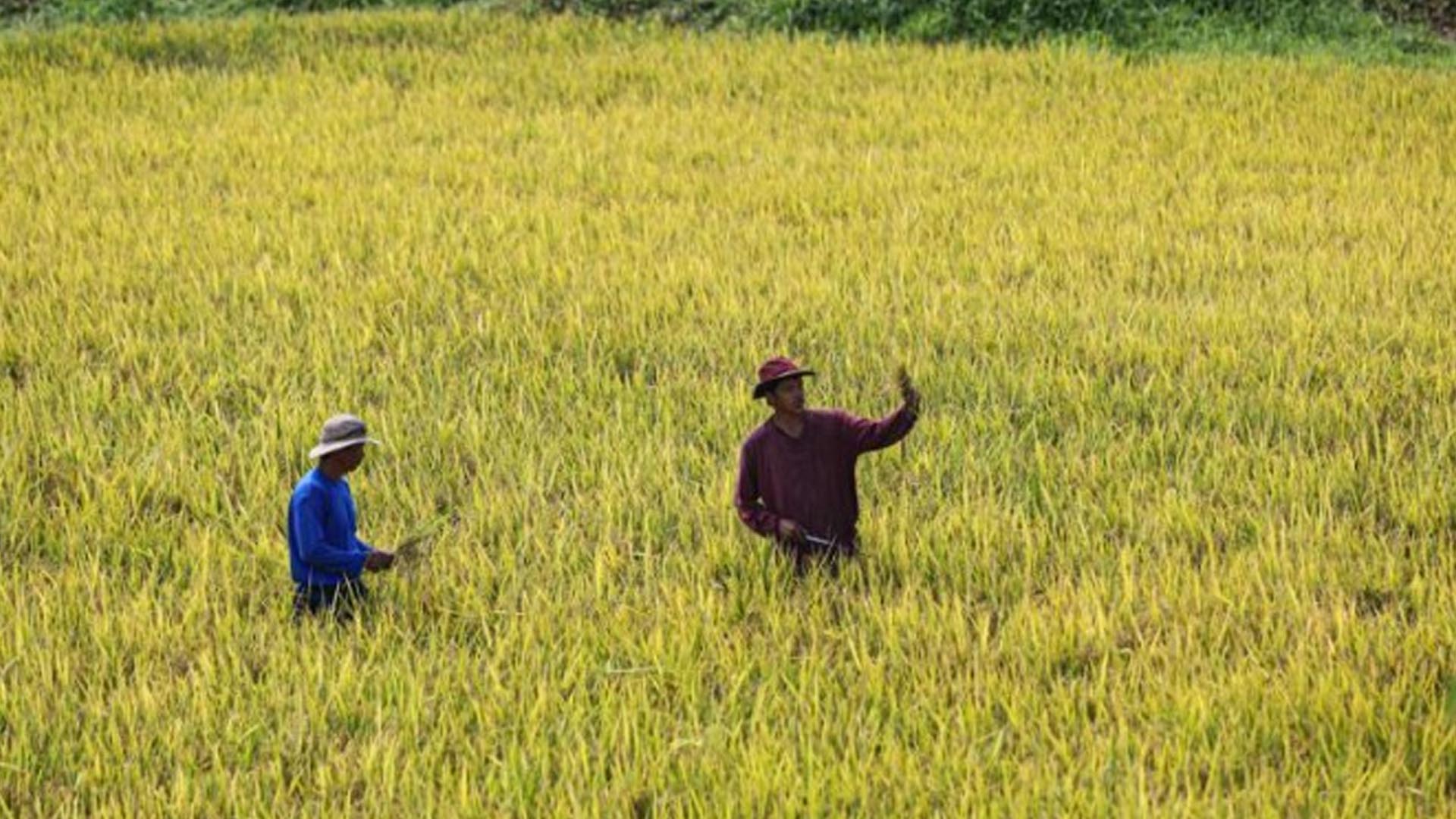






Despite the looming “very strong” El Niño, the Department of Agriculture (DA) said Thursday that the government is better prepared for its potential impact on the agricultural sector.
The extreme weather condition is expected between September and December, and possibly persist until the first half of 2027, according to the Philippine Atmospheric, Geophysical and Astronomical Services Administration (PAGASA).
In a press briefing, DA spokesperson Assistant Secretary Arnel de Mesa said learning from the previous El Niño phenomenon in 2024 allowed the government to put necessary measures in place.
“Masasabi natin na mas handa ang DA ngayon sa pagharap sa malaking banta ng na-confirm ng PAGASA na talagang (We can say that the DA is more prepared now in facing the huge threat of the PAGASA-confirmed) very strong El Niño,” he said.
From about one million metric tons (MT) in agricultural losses in palay (unhusked rice) production in 2024, the DA projected a downward trend to 700,000 MT for this year’s “very strong” El Niño.
De Mesa cited science-based approaches and early mitigation measures, such as using mapping to determine areas vulnerable to El Niño, closely monitoring climate conditions, optimizing productivity in areas less affected by drought, and distributing crucial interventions —including fuel subsidies, fertilizer support, and cash assistance— to eligible farmers and fishers.
He said the recovery of major dams following recent typhoons and the southwest monsoon could provide much-needed irrigation support to drought-prone areas.
“Doon sa mga huling data (Based on the recent data), Eastern Luzon, Cagayan Valley, Region 2, and of course, Region 1 mainit naman talaga iyan (it’s really hot there),” de Mesa said.
Both western and eastern portions of Luzon are vulnerable to extreme heat, including Mindoro, as well as Western Visayas, particularly Iloilo, which was hardly hit in 2024.
The timing of peak “very strong” El Niño is also crucial for the dry cropping season.
De Mesa said it will be favorable for the palay industry if extreme heat peaks next year when water demand for palay is minimal, as land soaking is set from October to November.
The DA also assured readiness to distribute drought-resistant rice seedlings, provided there are requests from local farmers.
Continuous rice importation
The DA, meanwhile, said the continuous rice importation is still part of the administration’s strategy to maintain stable prices of rice despite the expected impact of “very strong” El Niño on local rice production.
Sustained rice importation comes alongside support and intervention to local palay production through release of farm inputs, fertilizers, and fuel subsidies, among others.
Import arrivals, however, exclude 5 percent broken imported rice, following DA’s call to importers as part of its support to local palay amid the wet harvest season.
As of Sept. 17, the agency logged 3.89 million metric tons (MMT) of imported rice arrivals, according to the Bureau of Plant Industry (BPI).
This is higher than the 3.38 million MT recorded for the full-year rice imports in 2025. (PNA)