


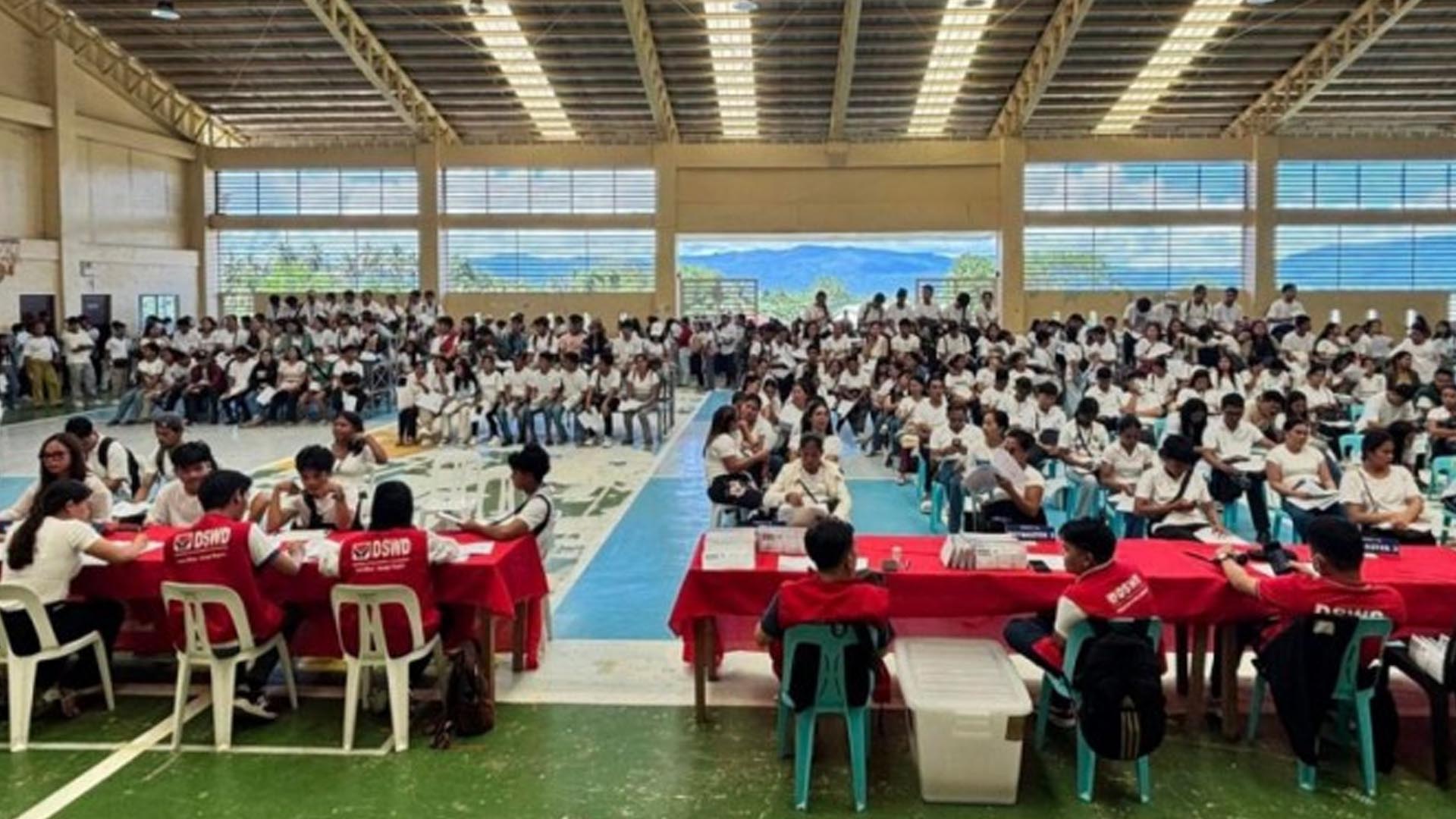






The Department of Social Welfare and Development’s (DSWD) Kapit-Bisig Laban sa Kahirapan – Comprehensive and Integrated Delivery of Social Services (KALAHI-CIDSS) students’ 2026 Cash-for-Work Program (CFWP) here ended Monday, benefiting 544 learners from the North Eastern Mindanao State University – San Miguel Campus in San Miguel, Surigao del Sur.
In a statement, the DSWD-13 (Caraga Region) said over PHP4.1 million in stipends was released to the students who joined the CFWP, which began on April 15.
Of the total number of beneficiaries, 137 were recent college graduates, and 417 are currently enrolled at NEMSU-San Miguel Campus.
“The beneficiaries rendered up to 25 days of structured community service and developmental tasks,” the DSWD-13 said.
To ensure that undergraduate participants did not compromise their academic responsibilities, students worked a capped four-hour daily schedule, while college graduates rendered a full eight-hour workday, it added.
“All participants were compensated based on actual services rendered following the prevailing regional minimum wage rate of PHP455.00 per day, ensuring that every peso received was a reflection of actual, disciplined public service,” the DSWD-13 said.
The 554 students were deployed across the different sections of the NEMSU-San Miguel Campus, the local government unit of San Miguel, and the DSWD-13 frontlines within the KALAHI-CIDSS and the Pantawid Pamilyang Pilipino Program.
Commendable program
For Datu Rico Maca, the Indigenous Peoples Mandatory Representative (IPMR) of San Miguel, said the collaboration among DSWD-13, NEMSU and the LGU has had a positive impact on students, especially those from IP communities.
“We are thankful to the DSWD for this program as it provided financial support to our students, especially those coming from the IP communities. Around 60 percent of students at NEMSU-San Miguel Campus are IPs coming from the Manobo tribe,” Maca said.
The stipends, he added, will provide immediate financial support to the IP students, especially in their daily needs while attending classes.
“The support they received through the CFWP will help them stay focused on completing their studies while still contributing to their families and communities,” Maca said.
He also noted that the CFWP has directly connected IP students to initiatives, such as KALAHI-CIDSS and 4Ps, that broadened their awareness of government social services. (PNA)