








Infrastructure development and budget transparency topped President Ferdinand R. Marcos Jr.’s agenda this week as his administration advanced projects aimed at boosting agricultural productivity, improving healthcare services, strengthening disaster resilience, and enhancing public financial management (PFM).
The President’s engagements from June 22 to 26 reflected the government’s continuing efforts to build critical infrastructure while introducing reforms that promote accountability and transparency in the use of public funds.
These initiatives form part of the administration’s broader development agenda of delivering quality public services while ensuring efficient governance.
Food security
The week opened with Marcos traveling to the Visayas to inaugurate key projects supporting food security and rural development.
On Monday, Marcos led the inauguration of the Mabini-Cayacay Small Reservoir Irrigation Project in Bohol, which is expected to provide farmers with a more reliable water supply all year round.
The irrigation facility is seen to improve agricultural productivity by expanding irrigated farmland area and reducing dependence on rainfall.
Irrigation remains one of the government’s priorities, considering its contribution to higher farm yields and increased rural incomes.
The President also witnessed the launch of the Department of Social Welfare and Development’s Walang Gutom Kitchen in Cebu City.
The initiative seeks to provide nutritious meals to vulnerable sectors while promoting community participation in addressing hunger and malnutrition.
Marcos said ensuring food security requires both agricultural investments and social protection programs that benefit Filipino families.
Regional dev’t
The administration’s infrastructure push continued in Mindanao later in the week, with Marcos inaugurating the Antong Dam and Irrigation System Project in Sultan Kudarat on Thursday.
The major irrigation facility is expected to increase agricultural production in the region by improving water availability for farmers, thereby strengthening the country’s long-term food security efforts.
The President also turned over the Socio-Civic Projects Fund to the provincial governments of Cotabato and South Cotabato during the launch of the Bawat Bayan Makikinabang in Koronadal City.
The funding will support various community development projects identified by local government units.
During his visit to Naga City, Cebu on Monday, Marcos also inspected the rehabilitation of the Metro Cebu Expressway Segment 3A.
He emphasized the importance of close coordination between the national government and local governments in delivering development programs to communities.
Healthcare modernization
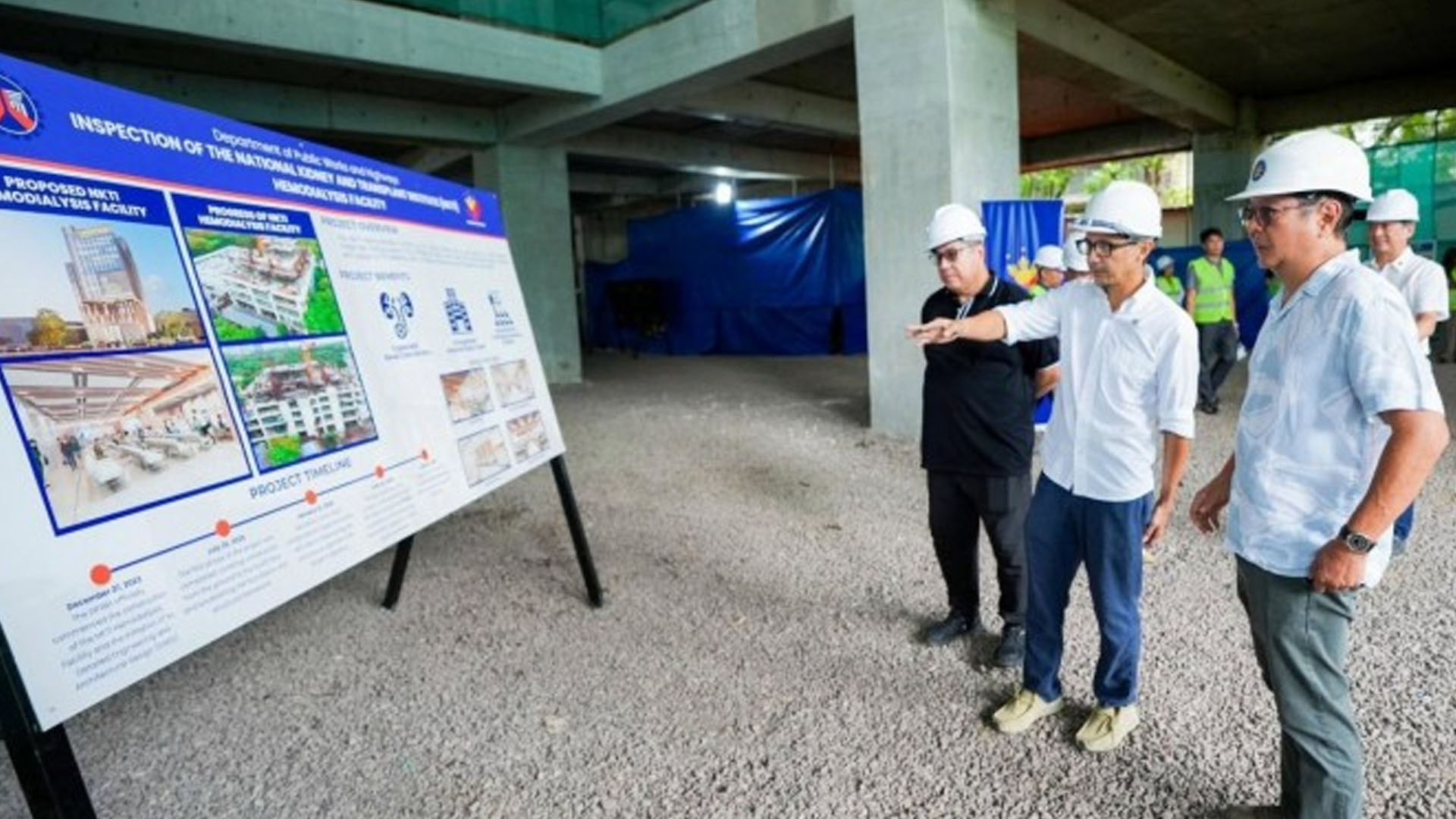
Healthcare infrastructure was also prioritized this week, as Marcos inspected on Friday the ongoing expansion of the National Kidney and Transplant Institute (NKTI) in Quezon City, welcoming steady progress in the construction of a mega hemodialysis center, which will be fully operational by early 2028.
The 13-story facility, which will house 200 state-of-the art dialysis equipment, is posited to be the largest dialysis center in Southeast Asia.
The new hemodialysis center is expected to increase the NKTI’s capacity to provide dialysis services and specialized kidney care.
The expansion also aims to reduce patient waiting time and improve access to quality healthcare.
Flood mitigation
Also on Friday, Marcos inspected the Gregorio Araneta Drainage Improvement Project in Quezon City.
The flood control project is expected to improve drainage capacity in one of the country’s most flood-prone areas and reduce flooding in nearby communities during heavy rains.
Marcos directed concerned agencies to sustain the implementation of flood mitigation projects, with focus now shifting to better waste management and regular drainage declogging.
Marcos also inspected the Mananga River Flood Mitigation Structure Rehabilitation in Talisay City, Cebu on Monday.
Budget transparency
Beyond physical infrastructure, the administration also pursued reforms aimed at improving fiscal governance.
In a ceremony at Malacañan Palace in Manila on Friday, Marcos endorsed the updated PFM Roadmap 2024-2028 and launched the government’s online budget tracker to strengthen fiscal discipline and make information on government spending more accessible to the public.
He said the open, real-time digital platform would enhance transparency by allowing citizens to monitor the implementation of government-funded projects.
He also approved the new PFM roadmap, which outlines strategies to further modernize budgeting, accounting, cash management, procurement, and auditing systems across government.
The reforms seek to improve efficiency in the management of public resources while ensuring that government expenditures translate into better services for Filipinos.
School monitoring
While focused on bringing progress to the country, Marcos ordered concerned government agencies to determine the root cause of the spate of school violence involving minors.
“Heartbroken” by the reported violent incidents in schools, the President cited the need to investigate the underlying causes to prevent further tragedies.
Marcos is also open to reviewing proposals to lower the age of criminal liability in the Philippines, following the tragic shooting incident at a school in Tacloban City.
Dev’t agenda
This week’s engagements underscored Marcos’ emphasis on infrastructure development as a foundation for economic growth.
Governance reforms also highlighted his administration’s push for greater transparency and accountability in public finance.
Marcos’ activities reflected an administration pursuing infrastructure projects and institutional reforms designed to support long-term national development. (PNA)