


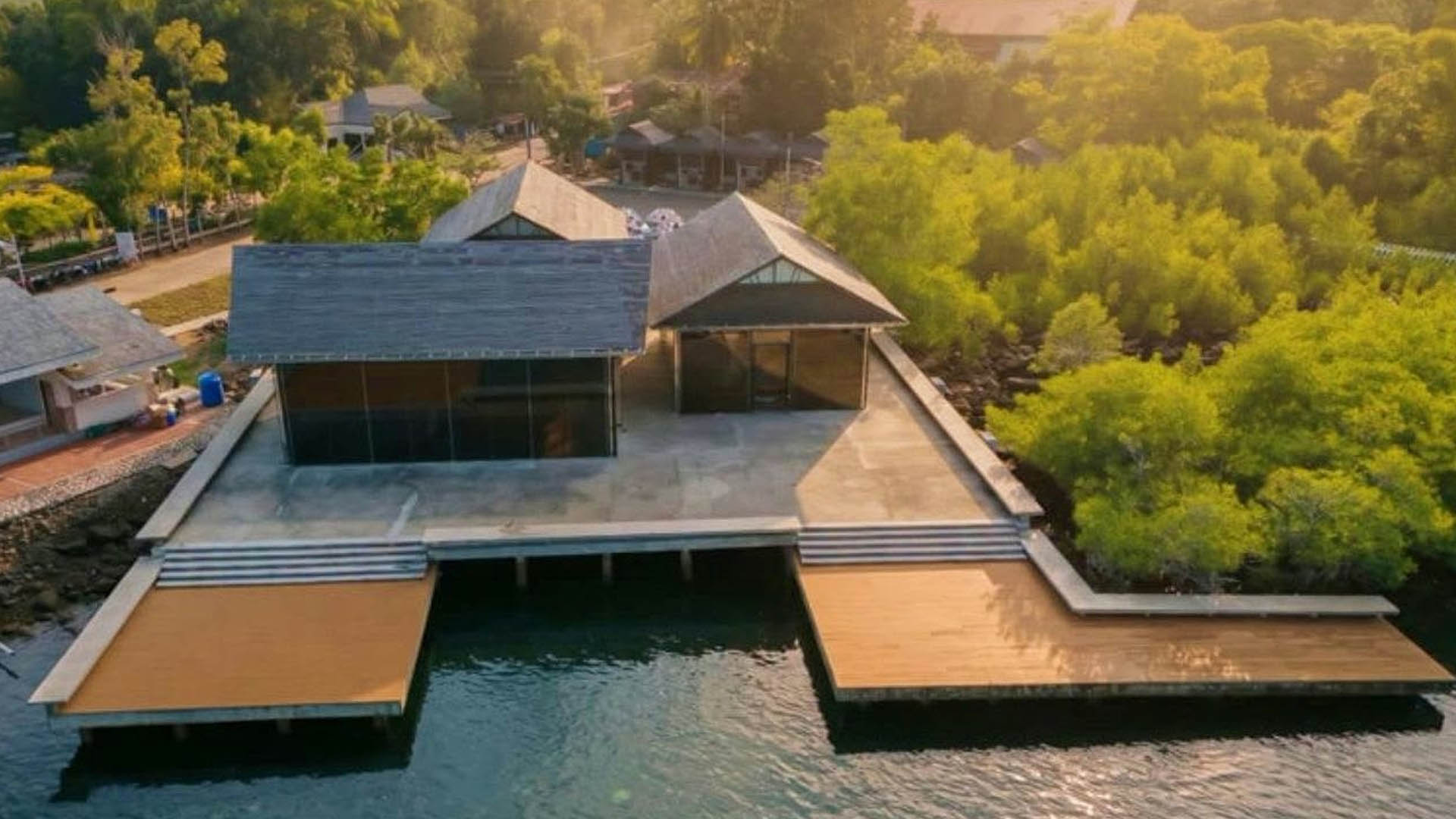






A repository of historical records, consisting of three glass pavilions set on a beachfront, is now open, allowing visitors to explore the diverse cultural heritage and shared history of this component city.
Museo Pantan, situated at Fuego-Fuego Beachfront in Barangay Tabiawan, this city, was opened to the public Thursday night.
It is the first museum in Southeast Asia built over water, surrounded by mangroves and corrals and with a beachfront terrace where people can gather and children can play. The terrace can also serve as a docking area for motorboats.
“Beyond its architectural inspiration, the Pantán symbolizes gathering, connection, and peaceful interaction among different peoples,” Mayor Sitti Djalia Turabin-Hataman said in a statement Friday.
In local Southern Philippine vernaculars Yakan, Tausug, and Sama, “pantan” refers to a threshold, landing, or porch-like space, specifically, a transitional platform or deck connecting the land and the water or sea.
Hataman said the museum houses historical photographs, artifacts, maps and personal accounts, all designed to present the city’s heritage through the lives and experiences of its people.
With 16 languages spoken across its communities, Isabela City reflects a distinct cultural identity shaped by generations of interaction, shared histories and evolving traditions.
“We want the story of Isabela to be in the hearts and minds of every Isabeleños, so that everyone can tell that story, especially the children,” she said.
“More than a structure, this museum is deeply personal to me. It represents so much and serves as a tangible expression of everything I have learned in my 10 years of public service.”
Filipino architect Royal Pineda, who shaped the architectural character of Museo Pantan, said the design avoids imposing itself on the surroundings guided by the belief that people and nature are inseparable.
Pineda said it works with the coastal landscape, allowing the mangroves, rock formations, sea, and nearby Sama-Bajau houses to remain part of the visitors’ experience.
“That’s why you’ll notice that the structure avoids the mangroves and the rocks. It tries to face the beauty of the place. Pineda told reporters in an interview Friday.
The glass structures allow the public to view the exhibits even when the museum is closed, making the space accessible to the community beyond visiting hours.
The city government of Isabela has initially allocated PHP20 million to construct the Museo Pantan. The funding allocation has increased to over PHP40 million due to changes in the design and material costs.
City Tourism Officer Claudio Ramos II said Museo Pantan will now be part of Isabela City’s tourism circuit.
“Every now and then people are asking where to go. So, this one adds to that tourism circuit aside from the beaches and weaving centers,” Ramos said in a separate interview.
He said the Museo Pantan will also showcase Indigenous Peoples (IPs) products, such as tenun and tepo.
Tenun is a traditional hand-woven textile, while tepo is a traditional hand-woven mat made from pandan leaves, crafted primarily by the Sama and Sama-Bajau communities in Isabela City and other parts of Basilan province. (PNA)