

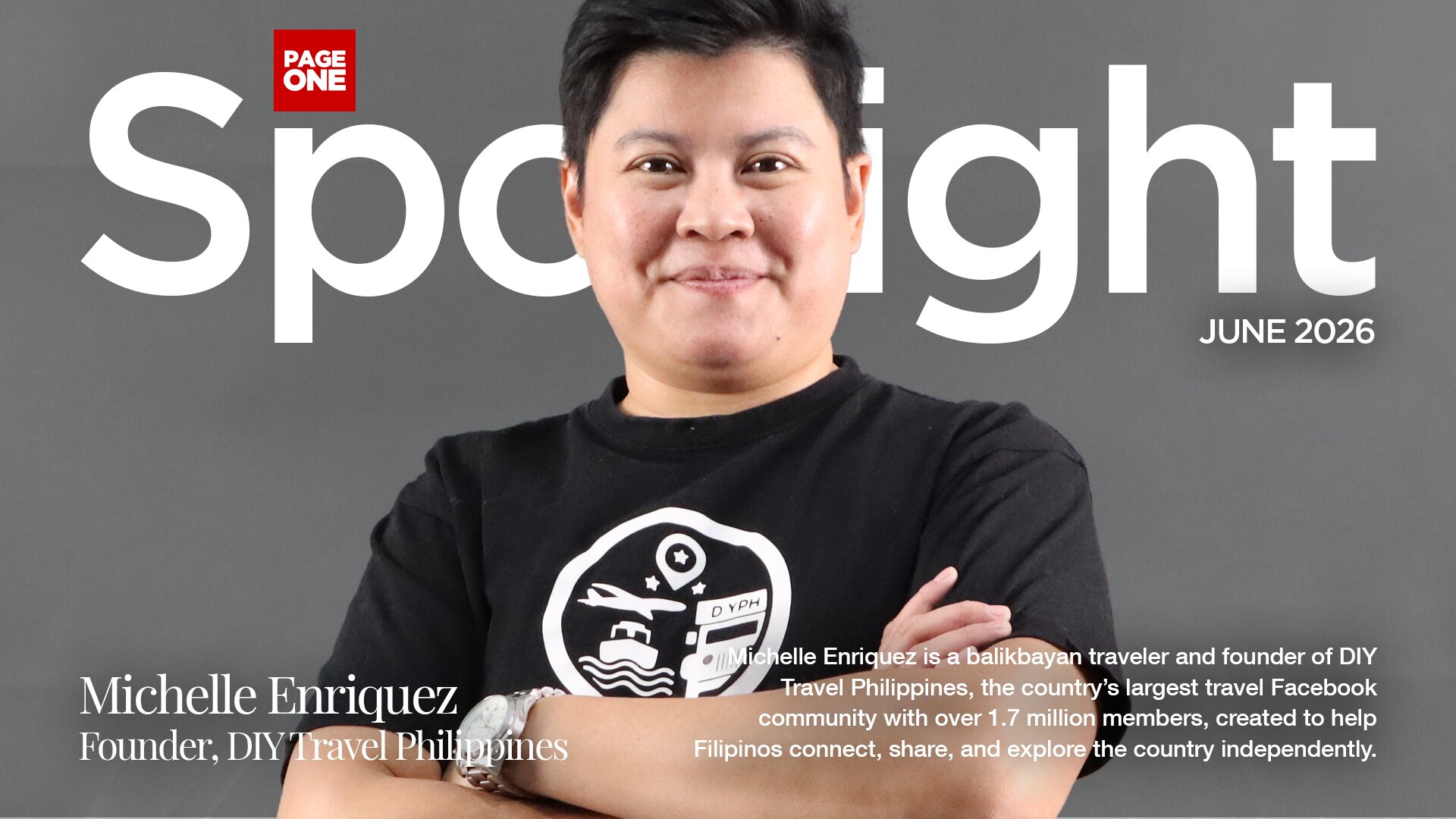






For more than a decade, Michelle Enriquez has watched DIY Travel Philippines grow from a simple online group into one of the country’s most trusted travel communities.
It survived rapid growth, changing social media algorithms, a global pandemic, and most recently, a cyberattack that nearly erased everything in a matter of hours.
Most online communities do not last five years. DIY Travel Philippines has endured for more than a decade.
That longevity raises a bigger question today. The issue is no longer whether the community remains relevant. The question is what it becomes next, and whether it can evolve into something more resilient than the platform it was built on.
For Michelle, the answer begins with understanding what the community really is.
More Than A Facebook Group
In an era where artificial intelligence can answer almost any travel question instantly, Michelle believes information alone is no longer what makes a community valuable.
“We live in a time where AI can answer almost any travel question in seconds,But for me, travel has never just been about information. It’s about real experiences, real people, and stories you can trust.” she said.
That distinction matters.
Travel planning today is easier than ever in terms of access to data. Flights, visa requirements, sample itineraries, and hotel options can all be found in seconds. What cannot be replicated as easily is lived experience.
That remains the heart of DIY Travel Philippines.
Even now, Michelle sees first-time travelers posting questions, members helping one another with visa concerns, and strangers sharing personal experiences simply to guide someone they may never meet.
After everything the community has endured, her perspective has become clearer.
“What we built was never just a platform.”
At its core, she says, DIY Travel Philippines remains what it always was: travelers helping travelers.
“The platform may change, but the heart of the community is something much harder to lose.”
The Lesson Of Building On Borrowed Ground
The hacking crisis forced Michelle to confront a difficult truth about digital community building.
She built a 1.7-million-member community on infrastructure she does not own.
That reality has changed how she thinks about the future.
If she were starting from scratch in 2026, she says she would still focus on bringing travelers together. But she would build differently.
“Knowing what I know now about platform dependence, I would explore building something we own more directly.”
That could mean a dedicated forum or a standalone app, something that gives the community stronger control over its own infrastructure.
Social media platforms like Facebook would still matter, but not as the foundation.
Instead, they would serve as discovery channels.
“I would still keep a presence on platforms like Facebook, but more as a way to reach people rather than the foundation itself.”
The mission would remain unchanged.
The structure would not.
For Michelle, resilience now means reducing dependence on any single platform.
The One Thing New Communities Cannot Copy
Since DIY Travel Philippines launched in 2015, the Filipino travel creator space has changed dramatically.
Travel pages, influencer communities, and digital travel brands have multiplied.
But Michelle believes there is one thing that cannot be replicated overnight.
Time.
More specifically, trust built over time.
“DIY Travel Philippines has something that’s very hard to replicate today. Time and trust.”
That trust was not manufactured through aggressive growth tactics or polished branding.
It developed slowly through years of conversations, recommendations, travel experiences, and consistent member interaction.
A new group can gain followers quickly.
Building depth is harder.
“What’s much harder to build is that depth,” Michelle said. “The shared experiences, the members who’ve been there from the early days, and the culture that formed naturally over time.”
That foundation, she believes, remains intact.
And it remains strong enough to rebuild on.
“Because at its core, it was never really about the platform. It has always been about the people.”
As long as members continue showing up for one another, the community can survive in different forms.
Can DIY Travel Philippines Outlive Michelle Michelle?
It is a question many founders eventually face.
Can what they built survive without them?
For Michelle, that question became deeply personal after her health challenges and periods of reduced visibility.
Following brain surgery, she naturally became less active in the community.
What surprised her was what happened next.
Nothing stopped.
The group continued growing.
Members continued helping one another.
Conversations continued.
That taught her something important.
“It showed me that it was never dependent on me in the first place.”
Over time, DIY Travel Philippines became bigger than its founder.
It became a trusted name among travelers.
More importantly, it became a culture.
“Yes, I do believe it can outlive me.”
For Michelle, that is not just possible. It is necessary.
“I think that’s the goal for any community like this. It shouldn’t depend on just one person to survive.”
Its longevity will depend on whether the values behind it remain intact: openness, generosity, trust, and a willingness to help.
As long as those remain, the community can evolve and endure.
Rethinking Digital Communities
After everything she has experienced, Michelle believes the broader system around digital communities needs to change.
Community builders generate enormous value for platforms. They create engagement, trust, and sustained activity that platforms monetize at scale.
Yet many founders remain vulnerable.
They often have limited protections, little control, and minimal support during crises.
“If I could change one thing, it would be giving community builders more protection and recognition.”
For Michelle, responsibility should begin with the platforms themselves.
After all, they benefit the most.
“I think platforms themselves should take the lead. They benefit the most, so they should also take more responsibility in supporting and protecting the people who create and sustain these spaces.”
That statement captures the future challenge of digital community building.
Communities like DIY Travel Philippines are no longer rare internet experiments. They are meaningful cultural spaces where people learn, connect, and support each other.
Yet many still exist at the mercy of systems designed for scale rather than stewardship.
Michelle Michelle understands that reality better than most.
She has seen how quickly years of work can be threatened.
She has also seen something more powerful.
Communities built on trust do not disappear easily.
Platforms may change.
Algorithms may shift.
Accounts may be compromised.
But the relationships people build with one another can outlast all of it.
And perhaps that is the clearest definition of what DIY Travel Philippines means in 2026.
It is no longer just a Facebook group.
It is proof that when people choose to help one another, the community can survive far beyond the platform where it began.