


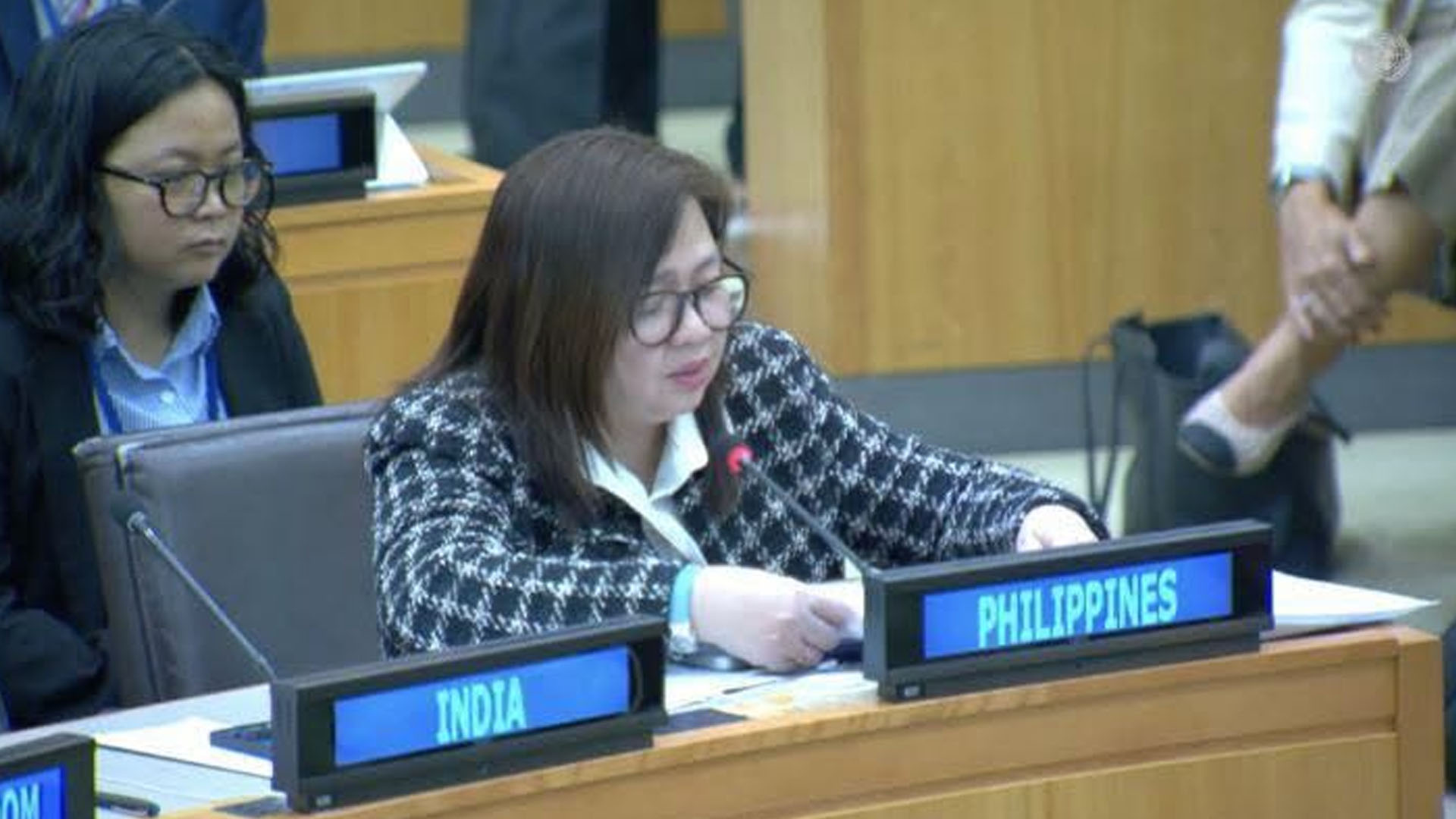






The Philippines is calling for sustained and predictable financing for early warning systems as intensifying climate hazards increasingly threaten lives, livelihoods, and economic stability.
According to a news release on Wednesday, Department of Environment and Natural Resources (DENR) Undersecretary for Finance, Information Systems, Climate Change and Administration Analiza Rebuelta-Teh made the call during the Solutions Dialogue on Financing Adaptation in the Era of Global Overshoot at the United Nations Headquarters in New York on Sept. 22.
“We are already confronting increasingly intense and compounding hazards that threaten lives, livelihoods, food and water security, ecosystems, and economic stability,” Rebuelta-Teh said, citing the Philippines as one of the most climate-vulnerable nations.
She said early warning systems should no longer depend on isolated, short-term projects but should be treated as permanent public infrastructure supported by multi-year and predictable financing.
“Adaptation cannot remain reactive. We need new, additional, predictable, and scaled-up public finance to enable developing countries to respond to growing climate risks at the speed and scale required,” she said.
Rebuelta-Teh cited estimates that adaptation costs in developing countries could reach USD310 billion to USD365 billion annually by 2035, noting that debt distress and high capital costs are further limiting the ability of developing countries to finance adaptation.
She said that in the Philippines, the annual economic cost of inaction across eight priority sectors identified in the National Adaptation Plan (NAP) is estimated at PHP645 billion.
She underscored that financing must cover not only the development of warning systems but also the work needed to turn warnings into timely protective action.
She added that international support should be aligned with domestic planning and budgeting, with a clear path toward national ownership of these systems.
“For the Philippines, our goal is to move from isolated projects to permanent, nationally owned systems of resilience,” Rebuelta-Teh said.
Rebuelta-Teh also highlighted the Philippines’ formalization as the 71st member of the Coalition for Disaster Resilient Infrastructure (CDRI), making it the second Southeast Asian nation to join the global body. (PNA)