


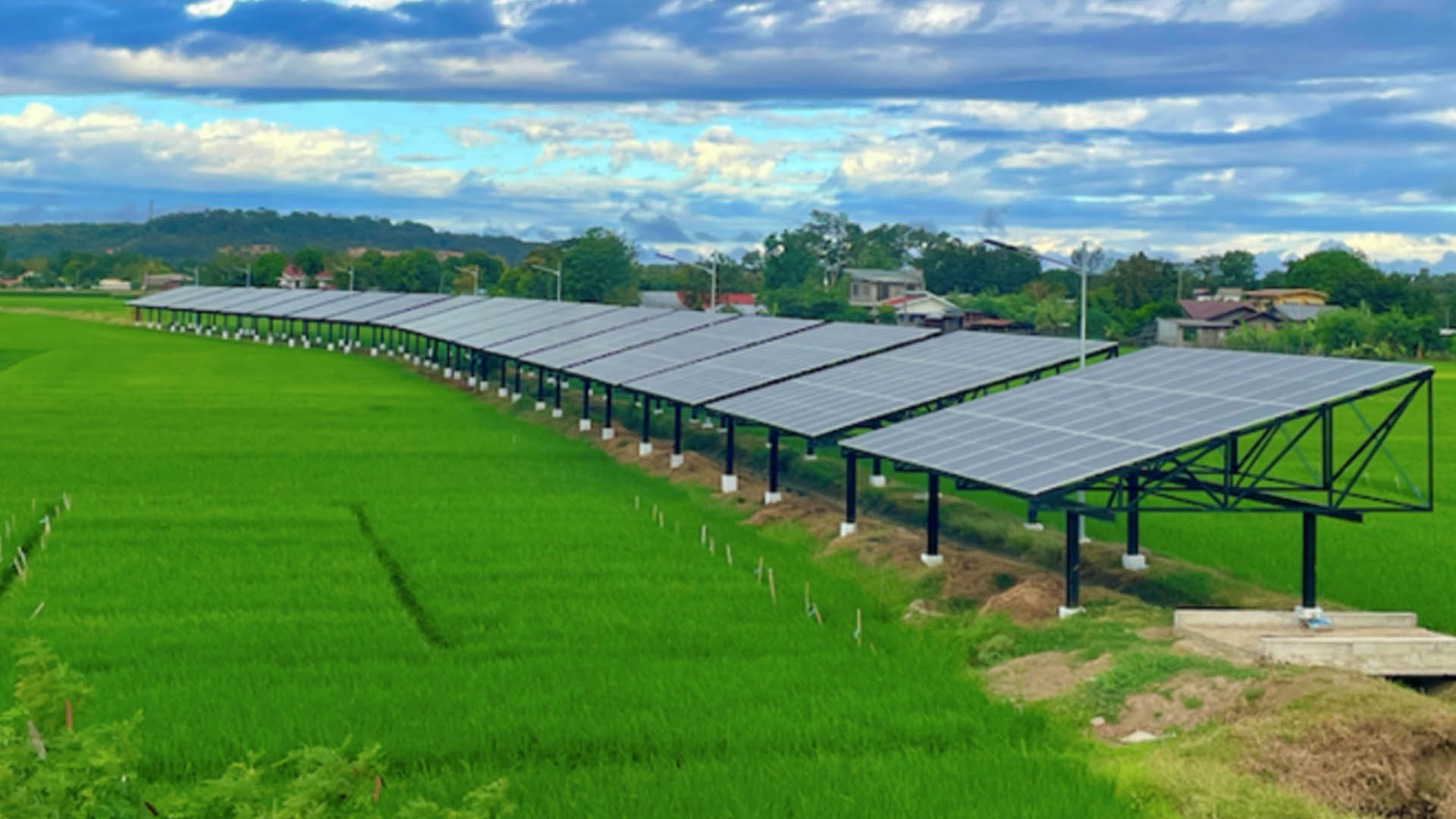






The Marcos administration is targeting the nationwide expansion of solar-powered irrigation to cut farmers’ production costs, strengthen food security and modernize the country’s irrigation system.
Acting Executive Secretary Ralph Recto said the National Irrigation Administration’s (NIA) Solar-Powered Pump Irrigation Program is targeting 10,000 sites nationwide by 2030, from 4,036 existing sites across all 17 regions.
The program aims to benefit two million farmers, irrigate an additional 100,000 hectares and move irrigation toward net-zero energy use under NIA’s Vision 2030 roadmap, according to a news release Sunday.
Solar pumps reduce farmers’ dependence on diesel, lowering irrigation costs and shielding them from fuel-price swings. NIA data show existing systems can provide six to eight hours of irrigation daily.
“This is a long-term investment in food security. Every peso farmers save on diesel can instead be used for seeds, fertilizer, equipment and other needs that directly improve their productivity and income,” Recto said.
The government is also pairing solar irrigation with digital technology, with NIA developing an artificial intelligence (AI)-based monitoring system that will use real-time data on water availability, soil conditions and irrigation needs to improve water delivery and reduce wastage.
In Bacarra, Ilocos Norte, 12 solar-powered units serving 340 hectares helped cut irrigation costs and sustain up to three cropping cycles annually.
In Bukidnon, AI-assisted scheduling using satellite data and soil-moisture monitoring is being used to determine how much water farms need and when.
Solar facilities in Pangasinan also continued operating during the prolonged power outage caused by Typhoon Egay in 2023, allowing farmers to protect their crops without relying on grid electricity or additional fuel.
“We want to move from traditional irrigation to smart, digital and climate-resilient water management,” Recto said.
“Ang layunin ng Pangulo ay pababain ang gastos ng ating mga magsasaka, paramihin ang kanilang ani at tiyaking may sapat na tubig ang ating mga sakahan kahit humaharap tayo sa (The President’s goal is to reduce our farmers’ costs, increase their harvests, and ensure that our farms have sufficient water even as we face) climate change,” he added. (PNA)